


Buying Antique Lighting: How to Choose, Rewire and Hang It Safely
|
Monday 28th September 2026 at 10:53 By Matteo |
 |
Antique lighting is one of the few things you can buy that changes a room twice. Switched off, it is sculpture. Switched on, it changes the colour of everything around it.
It is also the category where buyers most often come unstuck. A chandelier that looked glorious on a dealer's stand can swamp a modern sitting room, and a bargain pair of sconces can turn expensive once an electrician has seen the wiring. None of this is difficult to avoid. You simply need to ask a few questions before you buy rather than after.
Start with the room, not the fitting
Measure first. Ceiling height decides more than anything else about what will work.
Over a dining table you have freedom, because nobody walks underneath. A common starting point is to hang the lowest part of the fitting somewhere between 75cm and 90cm above the tabletop, so it lights faces without blocking them. Raise it a little in a tall room and drop it a little in a low one.
In a hall, landing or anywhere people walk, clearance is the constraint. You want the bottom of the fitting comfortably above head height, which in most homes means allowing at least two metres from the floor. That single measurement rules out a great many beautiful things, so take it before you fall in love.
Width matters as much as drop. For a dining table, something between a third and a half of the table's width usually looks right. In a square room, a fitting that is too small reads as an accident rather than a decision, and going slightly larger is almost always the braver and better call.

When you browse antique chandeliers, check the listed drop and whether it includes the chain and ceiling rose. A good dealer will tell you if the chain can be shortened, and many will happily add matching chain for a tall stairwell. Ask before buying, because matching old chain later is fiddly and sometimes impossible.
Telling rewired from original
Almost every antique light on the market has been electrified at some point, and many were originally made for candles or oil. Some Victorian and Edwardian fittings began life as gas, and you can occasionally still spot redundant taps or blanked openings on the arms. None of that is a fault. What matters is the state of the wiring inside.
Signs that a fitting is running on old wiring include braided or fabric covered flex, twisted twin flex without a modern outer sheath, insulation that has gone brittle or dusty, and old bakelite fittings and terminals. Rubber insulated cable from the middle of the last century perishes with age and heat, and once it starts to crumble it should not be used.
Modern rewiring looks different. You should see flexible cable with clean, supple insulation, proper bulb holders with intact insulating sleeves, and, on a metal fitting, an earth conductor connected to the metalwork.
Sensible questions to put to the dealer are simply these. Has it been rewired, and when? Is it wired with an earth? Has it been tested? Many specialist lighting dealers rewire as a matter of course and will say so plainly in the description. Where a fitting has not been rewired, treat it as needing the work, budget for it and negotiate on that basis.
What your electrician will want to do
Fitting antique lighting is a job for a qualified electrician, ideally one registered with a recognised competent person scheme. There are three things they will look at.
Earthing
Metal fittings normally need to be earthed. Some older lighting circuits in British homes were installed without an earth conductor at the ceiling, which is one of the most common surprises during installation. An electrician will check first. If there is no earth available, the options usually involve running a new cable to that point or choosing a fitting that does not require one, so it is much better to know before the chandelier arrives.
Support and weight
A standard ceiling rose and the plasterboard around it are not designed to carry much load. Anything substantial needs fixing to a joist or to a proper support above the ceiling, which sometimes means lifting a floorboard upstairs. Always give your electrician the weight of the piece in advance, and ask the dealer for it if the listing does not say.
Paperwork and locations
In England and Wales, electrical work in homes is covered by Part P of the Building Regulations, and installations are expected to meet the current wiring regulations, BS 7671. Scotland and Northern Ireland have their own arrangements. Swapping a fitting on an existing circuit is usually simple, while new circuits and work in special locations such as bathrooms bring extra requirements. Ask for a Minor Electrical Installation Works Certificate when the job is done, and keep it with your house paperwork.
On bathrooms, a brief word of caution. The area around a bath or shower is divided into zones with minimum protection ratings, and most antique fittings were never designed for damp conditions. Take advice rather than chancing it.
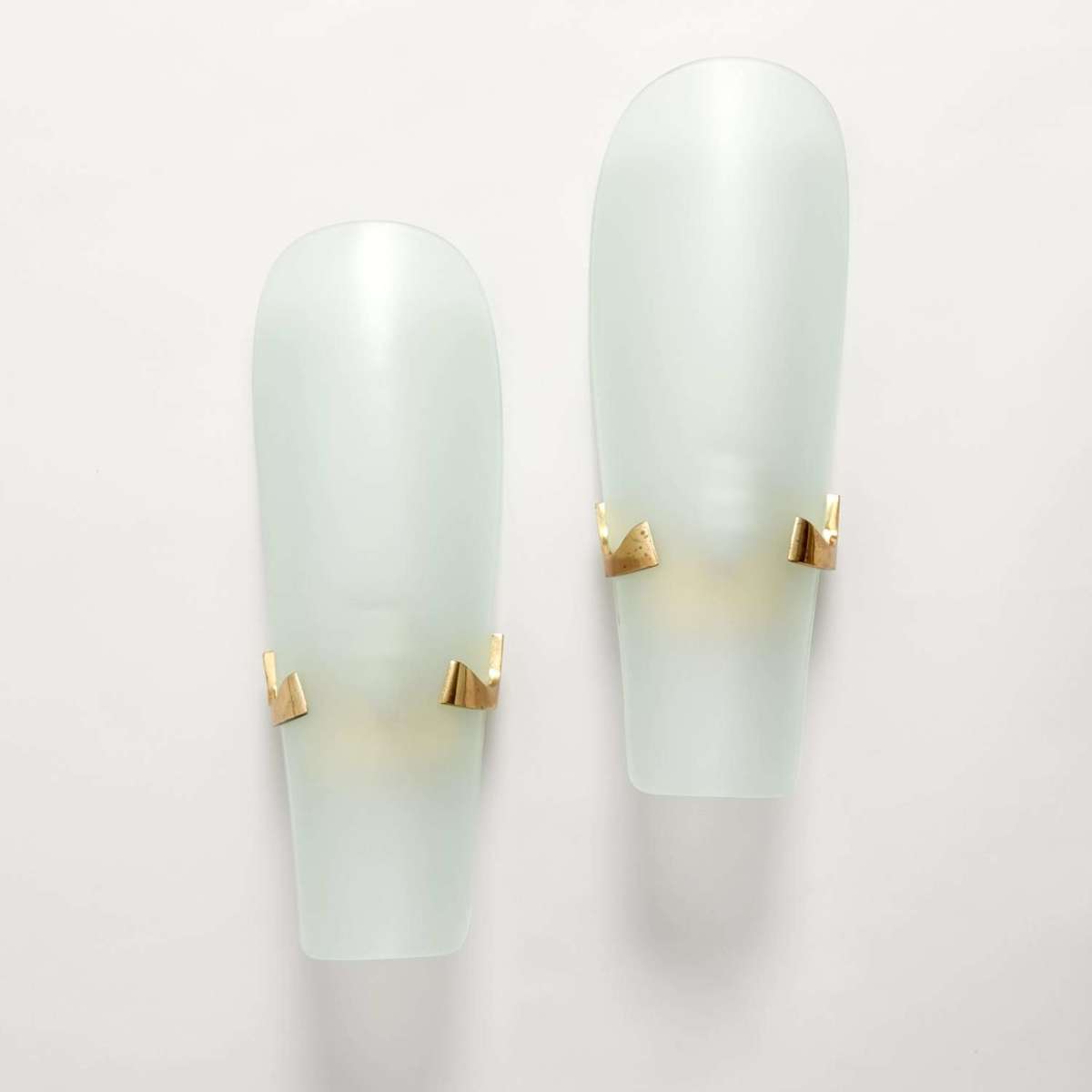
Wall lights are the easy win
If a chandelier feels like a commitment, start with antique wall lights and sconces. They are the cheapest way to make a room feel considered, and pairs of French brass wall lights often start under £200, with sets of four and six turning up regularly.
Two practical points. First, wall lights need a cable in the wall, so the cost of installation can exceed the cost of the lights unless there is already a fitting in roughly the right place. Plan them into decorating work if you can. Second, buy in pairs or sets wherever possible, because matching a single sconce later is a long and often fruitless search.
Mounting height is largely a matter of taste, though somewhere around eye level when standing suits most rooms, a little lower beside a bed and a little higher in a stairwell.
Choosing bulbs that flatter old glass and brass
This is the step people skip, and it does more damage than any other. A superb crystal chandelier fitted with cold bright bulbs looks like a shop display.
Aim for a warm colour temperature, roughly in the 2200K to 2700K range. Warmer light brings out the yellow in old brass and gilt, and lets cut glass do its work. Cooler bulbs flatten both and make gilding look grey.
LED filament bulbs are the sensible modern choice, since the visible filament suits a period fitting and the heat output is low, which matters on old wiring and painted toleware. Buy dimmable versions and put them on a dimmer if you can, because antique fittings look best when run gently. Check that your dimmer is rated for the LEDs you are using, as an incompatible pairing causes flicker and buzz.
Check the cap type before ordering. Chandeliers and sconces usually take small screw or small bayonet candle bulbs, while larger fittings take standard screw or bayonet caps. If a fitting takes eight bulbs, buy eight identical bulbs from one batch, since mixed batches show up as a mismatch of tone.

The same rules apply to antique table lamps, which have the great advantage of needing no electrician at all. Many are converted vases, candlesticks or oil lamps, so check that the conversion is neat, that the flex and plug are modern, and that the base is heavy enough not to topple when the shade goes on.
Shades, drops and missing parts
Glass is the weak point of any old light. Before you buy, count the shades and the drops and ask directly whether any are replacements.
Matching antique glass is genuinely difficult. Colour, thickness, cut pattern and fitting size all have to agree, and old glass has a tint that new glass rarely copies. On a chandelier, missing drops from an outer row are usually easy to live with, while a missing shade on a set of wall lights leaves you with an obvious gap.
When you do need to match something, photograph the piece against a plain background, measure the fitter diameter, and take the sample with you or send it to the supplier. For fabric shades, check the fitting type, since a gimbal, a duplex and a simple clip all need different frames.
Questions worth asking before you commit
- What is the total drop, and does that include chain and ceiling rose?
- What does it weigh?
- Has it been rewired, and is there an earth?
- How many bulbs, and what cap size?
- Are any shades or drops replacements?
- How will it be packed, and is the glass removed for transit?
Sound answers to those six questions will spare you almost every unpleasant surprise.
Where to look
If you enjoy the background as well as the practicalities, our guest post on the history of antique chandeliers traces how these pieces developed from medieval candle beams to Georgian cut glass. For a room where lighting does most of the atmospheric work, our piece on designing a vintage bar at home is a good companion read.
When you are ready to start looking, our dealers list several thousand pieces of antique lighting, from single sconces to substantial hall lanterns. Take your measurements first, read the descriptions properly, and ask the questions above. Get those right and you end up with something that will still be lighting a room long after every modern fitting in the house has been thrown away.


