


The Arts and Crafts Movement: A Collector's Style Guide
|
Tuesday 23rd June 2026 at 08:59 By Matteo |
 |
There is a particular pleasure in owning something that was made slowly and by hand. That idea sits at the very centre of the Arts and Crafts movement, which set itself against the rush of the machine age and put the maker back at the heart of the work. More than a century later, its honest oak, hammered metal and quiet, useful beauty are as appealing as ever, and prices still range from the affordable to the serious.
If you are drawn to the style but unsure how to recognise it, this guide will help you read the signs and buy with a little more confidence.
A reaction against the machine age
The movement grew in Britain during the second half of the nineteenth century, flourishing from around 1860 to 1910. It was, in large part, a reaction. As factories filled homes with ornate, mass produced Victorian goods, a group of designers and thinkers argued for something different: objects made well, by skilled hands, from honest materials.
The writer and designer William Morris became its most famous voice, and the critic John Ruskin gave it much of its thinking. Their belief was simple to state and hard to live by. An object should be useful, it should be beautiful, and it should show the work and the materials that went into it rather than hide them. That principle, often called truth to materials, is the thread that runs through everything the movement produced.
Oak, and the honesty of construction
Furniture is where the style speaks most clearly. Look first for solid oak, often left in a warm, mellow finish that lets the grain show. Many of the best pieces were made from quartersawn oak, which reveals a distinctive flecked figure across the surface.
Then look at how the piece is put together. Arts and Crafts makers treated construction as decoration. Joints are left on show rather than concealed, pegged tenons stand slightly proud, and the odd hammer mark or tool track is part of the character, not a fault. Forms tend to be upright, simple and a little architectural, sometimes lifted by a pierced heart or a plain metal hinge. You will see all of this among antique oak chairs and settles.

Hammered metal and the maker's hand
Metalwork is the next great giveaway. The movement loved copper, brass and pewter, worked by hand so that the surface keeps the gentle, dimpled texture of the hammer. Chargers, trays, jugs, candlesticks and clock cases were all made this way, often with simple raised patterns of leaves, hearts or galleons pushed out from behind.
The London store Liberty and Co. did a great deal to popularise the look, selling pewter and silver in the Arts and Crafts manner. Hand finished copper and brass like this still turns up often, and a piece with honest age and a soft, untouched patina is worth far more than one that has been polished within an inch of its life. Our antique metalware is a good place to get your eye in.

Pottery, tiles and stylised nature
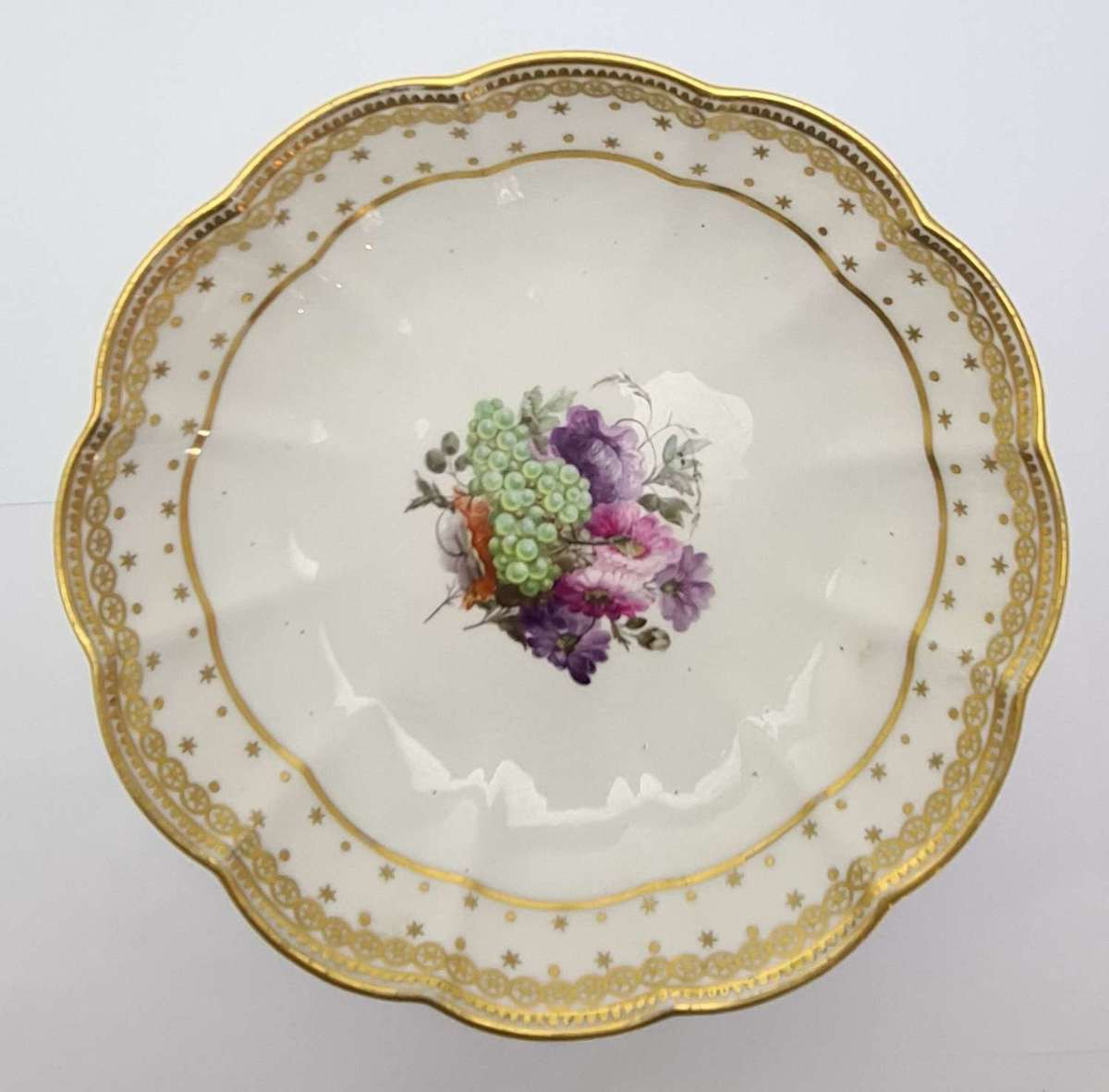
The movement also produced wonderful pottery. Rather than the fussy, gilded china of the day, makers favoured simple shapes, rich glazes and stylised patterns drawn from nature, such as tulips, roses, peacocks and trailing foliage. Matte and lustre glazes were both popular, and a single bold motif often did the work of a busy painted scene.
You can find this spirit across a great deal of antique pottery and ceramics, from decorative chargers to humble, beautifully glazed vases that would once have sat on a windowsill.
Light and stained glass
Lighting from the period has a quiet drama. Think copper and wrought iron lanterns, hanging lights with frames beaten by hand, and shades set with coloured or stained glass that glows warmly when lit. The same honest materials and visible making apply here as everywhere else.
Original fittings often need rewiring before use, so it is sensible to budget for a qualified electrician. You will find characterful examples among antique lanterns and hanging lights.

Names worth knowing
A handful of names come up again and again, and recognising them helps you understand what you are looking at. William Morris and his firm led the way in wallpapers and textiles. The architect Charles Voysey designed houses and the furnishings to match, in a clean, restrained style. Charles Robert Ashbee founded a guild of craftsmen, while Ernest Gimson and the Barnsley brothers became known for fine Cotswold furniture. In the United States, Gustav Stickley carried the ideas across the Atlantic with his sturdy Craftsman pieces.
Marks and attributions can be tricky, and not every maker signed their work, so treat a famous name with healthy curiosity and ask a dealer for the evidence behind it.
Telling it apart from Art Nouveau and Art Deco
It is easy to muddle the Arts and Crafts movement with its neighbours. Art Nouveau, which overlapped with it, is all flowing, sinuous curves and a more sensuous, decorative feel. Arts and Crafts is more upright, restrained and structural, with the craft on show rather than the flourish. Later still came Art Deco, which embraced the machine, bold geometry and glamour, more or less the opposite of everything the earlier movement stood for. If you enjoy tracing how taste changed, our look at the history behind Art Deco jewellery makes an interesting companion.
Buying with a clear eye
Because the style has never really gone out of fashion, you will also see modern pieces described as Arts and Crafts style. There is nothing wrong with those, but they are not antiques, so check the age before you pay an antique price. On genuine pieces, look for honest wear in the places you would expect, consistent old surfaces, and construction that matches the period.
If you are just starting out, our guide on how to start an antique collection is a gentle introduction, and the most popular styles of antique furniture explained will help you place the movement among its neighbours.
The real charm of Arts and Crafts pieces is that they were made to be used and to last, which is exactly why they still feel so right in a home today. Have a browse, and see which honest, handmade piece earns a place in yours.


